
Description
Cambodian Mushrooms
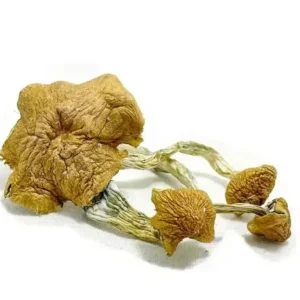
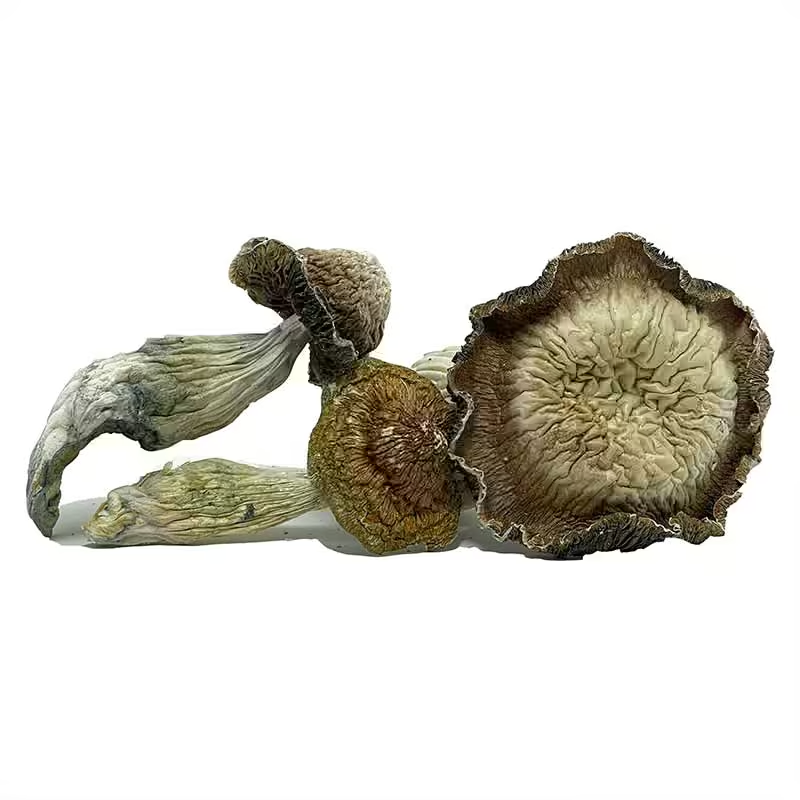
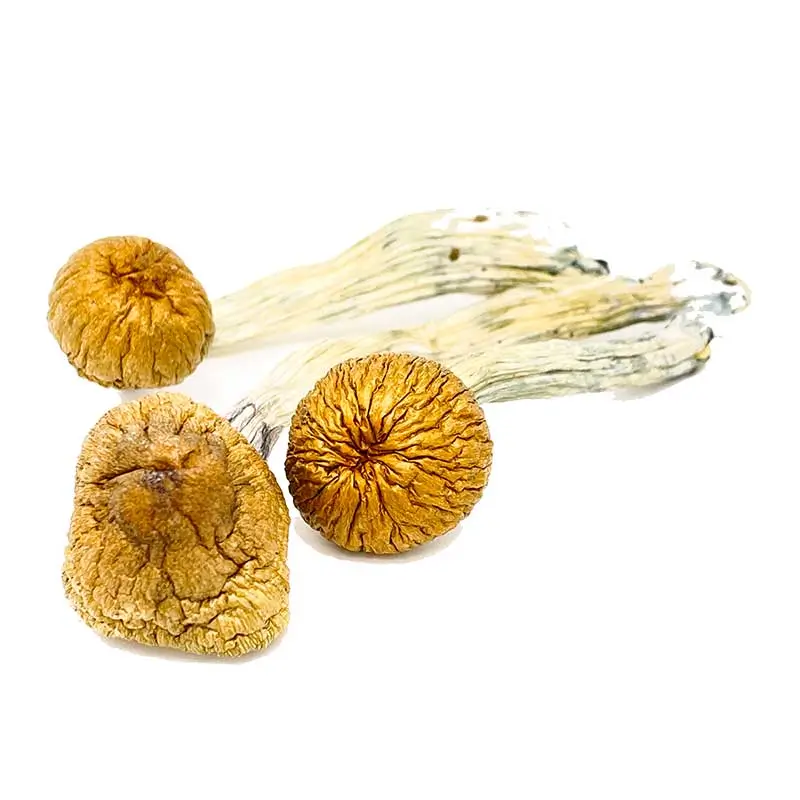
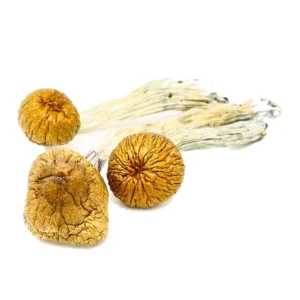
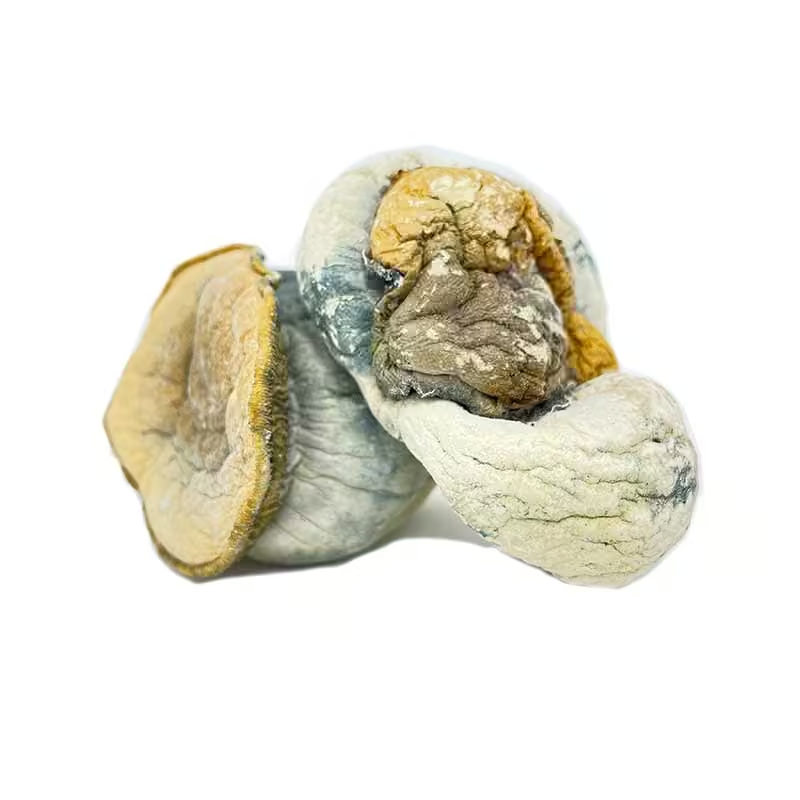
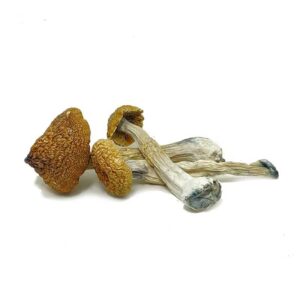
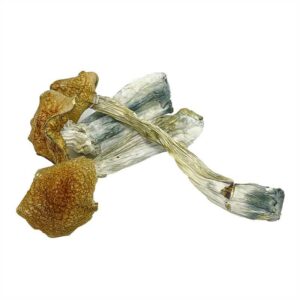
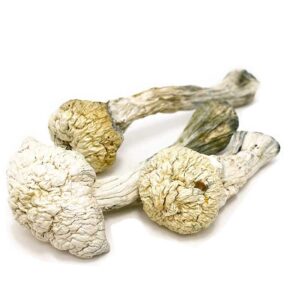
Cambodian mushrooms exhibit classic Psilocybe cubensis morphology but with distinct features that set them apart. Mature caps are 1-5 cm in diameter, starting conical and expanding to broadly convex with a subtle nipple-like umbo. The caramel-to-golden brown hue fades to pale buff as they dry, often displaying blue bruising when handled—a hallmark of psilocybin content.
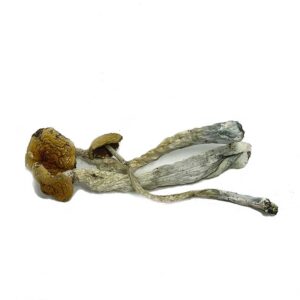
Stems (stipes) are 4-15 cm tall, thick, and white to yellowish, frequently contorting in dense clusters. Spores are deep purple-black, leaving a telltale print. Microscopically, they feature four-spored basidia and cheilocystidia, confirming their Psilocybe classification.
In the wild, Cambodian mushrooms fruit prolifically during Cambodia’s monsoon season (May-October), feeding on decaying organic matter. Key identification tip: Always verify with a spore print and bruising test, as lookalikes like Panaeolus species lack the characteristic blue oxidation from psilocin.
The Science Behind Psilocybin in Cambodian Mushrooms
At the heart of Cambodian mushrooms’ allure is psilocybin, a tryptamine alkaloid that metabolizes into psilocin in the body. Lab analyses consistently rate Cambodian strains as moderately to highly potent, with psilocybin levels around 0.6-1.2% dry weight and psilocin at 0.2-0.6%. Baeocystin and norbaeocystin, minor alkaloids, contribute to nuanced effects.
Neuroscientifically, psilocybin binds to serotonin 5-HT2A receptors, disrupting default mode network activity and promoting neuroplasticity. Studies from Johns Hopkins and Imperial College London show it induces profound alterations in perception, emotion, and cognition—often described as ego dissolution or mystical experiences.
Cambodian mushrooms’ genetics yield consistent potency across flushes, attributed to selective breeding. Research in mycology journals, like Mycologia, notes their high sporulation and rhizomorphic mycelium, enhancing resilience to contaminants.
Cultivation Techniques for Cambodian Mushrooms
Cambodian mushrooms are a favorite among home cultivators for their beginner-friendly profile. They colonize substrates like brown rice flour/vermiculite (PF Tek) or grain spawn in just 10-14 days—faster than many strains. Optimal conditions mimic Cambodian tropics: 28-32°C (82-90°F) for colonization and 24-27°C (75-80°F) with 90-95% humidity for fruiting.
Popular methods include monotubs with coir/pasteurization or bulk casing with manure-based mixes, yielding multiple flushes. Their aggressive mycelium resists trichoderma mold, making them forgiving for novices. Genetic stability ensures uniform fruits, often 5-15 grams wet per cluster.
Advanced growers experiment with agar work for isolates, selecting for larger caps or bluer bruising. LED lighting (blue spectrum) boosts pinning, per recent studies in Journal of Mycology.
Effects and User Experiences
Users report Cambodian mushrooms deliver a fast-onset trip (20-40 minutes), peaking at 1-2 hours with visuals like breathing walls, geometric patterns, and synesthesia. Body load is light compared to heavier strains like Penis Envy, with euphoria, introspection, and giggles prominent at 1.5-3 gram doses.
At higher doses (3.5+ grams), profound insights emerge, often with emotional catharsis. Duration: 4-6 hours, with a gentle comedown. Anecdotal reports highlight their “clean” energy, ideal for social or therapeutic settings.
Variability exists; set, setting, and stomach contents influence outcomes. Tolerance builds rapidly, requiring 1-2 week breaks.
Cultural and Historical Significance
In Cambodia, mushrooms like these feature in animist shamanism, used for healing and divination. Ancient Angkor Wat carvings hint at fungal motifs, suggesting pre-Angkorian use. Post-Vietnam War, Western backpackers “rediscovered” them, exporting spores globally.
Today, Cambodian strains symbolize accessible psychedelics, influencing modern festivals like Burning Man or research retreats. They’re name-checked in Paul Stamets’ works and Terence McKenna’s ethnobotanical lectures.
Globally, decriminalization movements (e.g., Oregon, Colorado) spotlight cubensis strains, including Cambodians, for mental health potential.
Comparisons with Other Psilocybe cubensis Strains
| Strain | Colonization Speed | Potency | Visuals | Ease of Growth |
|---|---|---|---|---|
| Cambodian | Very Fast (10-14 days) | Medium-High | Moderate, Euphoric | Excellent |
| Golden Teacher | Medium (14-21 days) | Medium | Insightful | Good |
| B+ | Fast (12-18 days) | Medium | Body-High | Very Good |
| Penis Envy | Slow (21-30 days) | Very High | Intense | Moderate |
Cambodians excel in speed and reliability, outpacing slower strains while matching potency of classics like Mazatapec.
Therapeutic Potential and Modern Research
Emerging studies position psilocybin-rich mushrooms like Cambodians for treating depression, PTSD, and addiction. A 2022 Nature Medicine trial showed 80% remission in treatment-resistant depression post-psilocybin therapy.
Cambodian strains’ consistency aids microdosing protocols (0.1-0.3g), with users reporting enhanced creativity and mood. Neuroimaging reveals increased connectivity in brain regions linked to emotion regulation.
Caveats: Not FDA-approved; consult professionals. Legality varies—research federally in the US, but spores are legal in most states.
Safety, Risks, and Best Practices
While non-toxic, Cambodian mushrooms pose psychological risks like bad trips or HPPD. Start low (1g dried), use integration practices, and avoid mixing with SSRIs/MAOIs.
Physical side effects: nausea, dilated pupils. Test for allergies. Foraging demands expertise to evade Galerina toxins.
Harm reduction: Sitter, calm environment, hydration.
Conclusion: The Enduring Appeal of Cambodian Mushrooms
Cambodian mushrooms embody nature’s psychedelic gift—fast-growing, potent, and culturally rich. From Cambodian jungles to global labs, they bridge ancient wisdom and modern science. As research advances, their role in consciousness expansion grows undeniable.
Explore responsibly, respect legality, and dive into the mycological community for deeper insights. Whether through cultivation logs or scientific papers, Cambodian mushrooms continue to enlighten.
Reviews
There are no reviews yet.