Description
Blue Pulaski Mushrooms
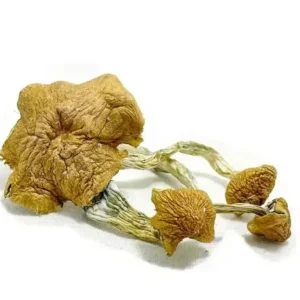
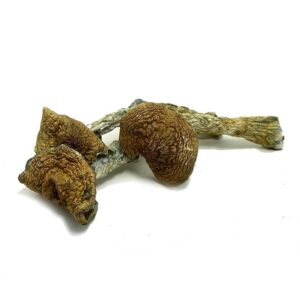
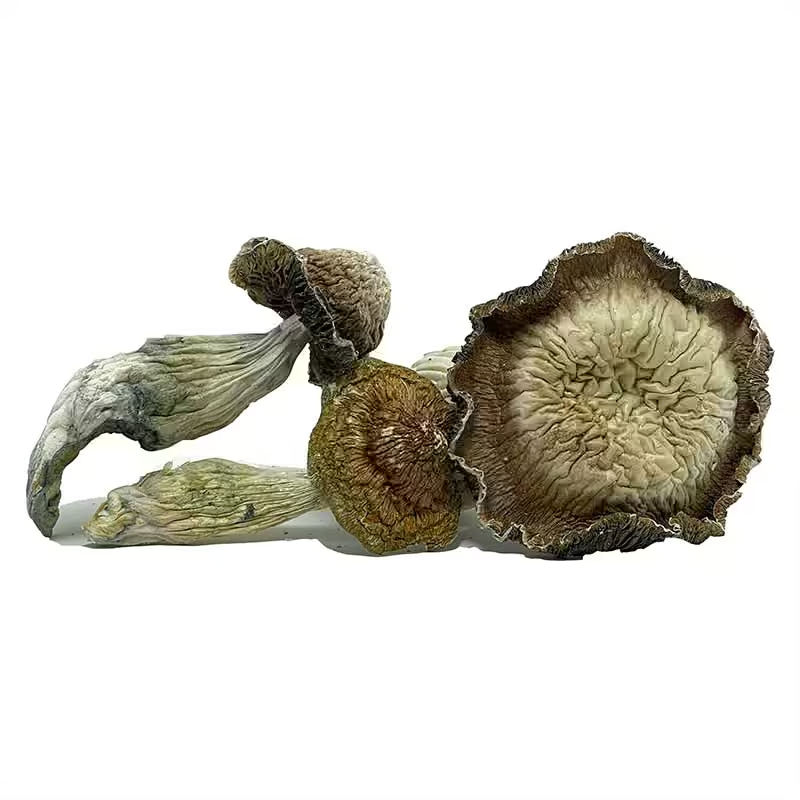
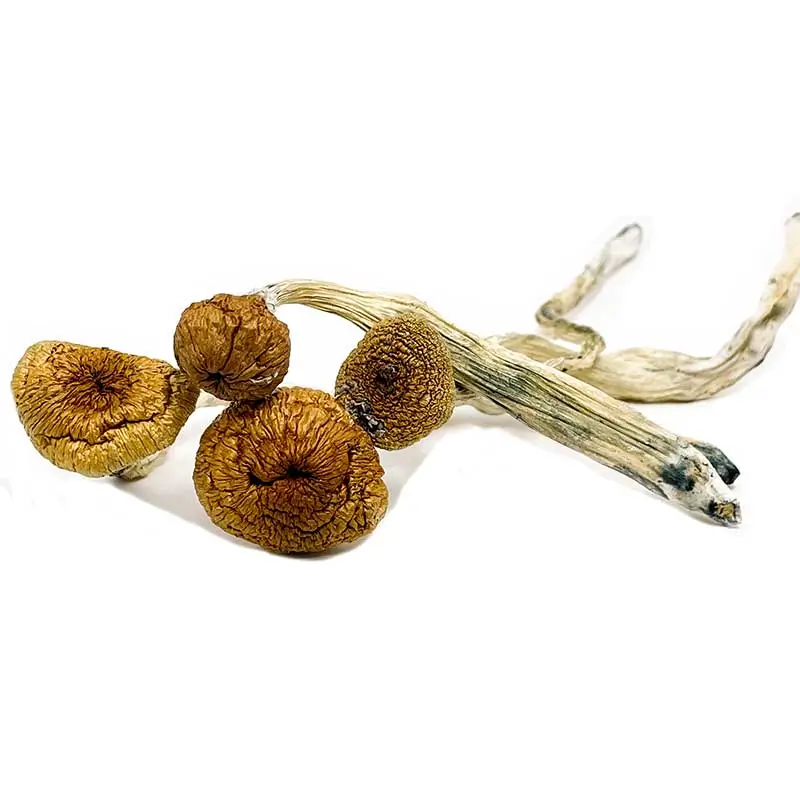
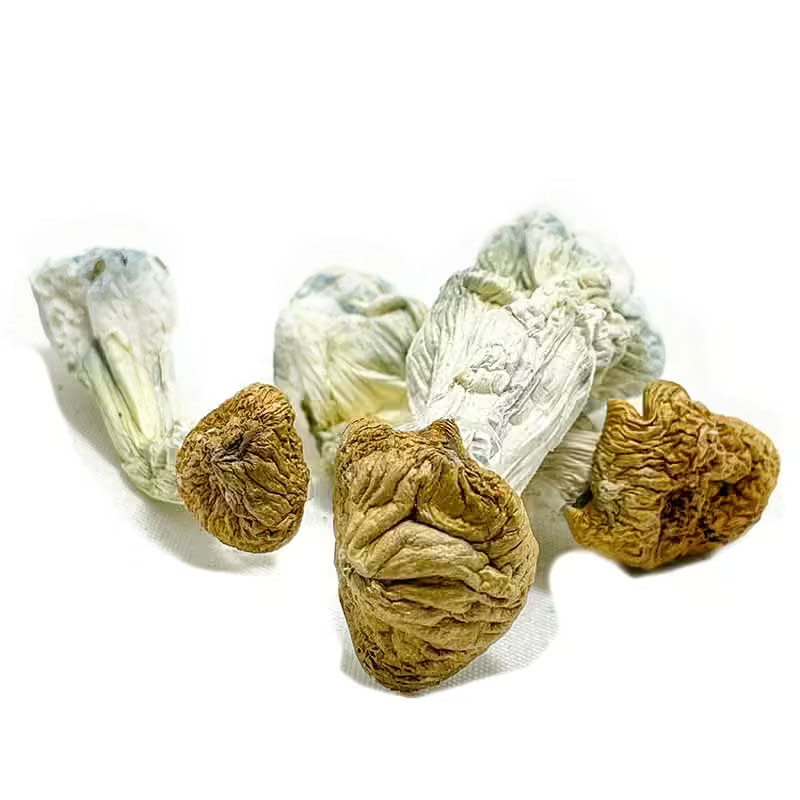
Blue Pulaski Mushrooms belong to the Psilocybe genus, a group renowned for bioactive compounds. Discovered in the mid-20th century near Pulaski, New York – hence the name – these mushrooms are characterized by their small to medium caps (1-4 cm in diameter) that start conical and flatten with maturity. Fresh specimens feature a caramel-brown to olive hue, but the hallmark is their intense bluing: upon bruising, the flesh turns a brilliant turquoise blue, a reaction caused by the oxidation of psilocin and psilocybin, the primary active alkaloids.
This bluing isn’t just aesthetic; it’s a key identifier. Scientifically, the blue pigment results from the enzymatic breakdown of these tryptamines, distinguishing Blue Pulaski from look-alikes like Panaeolus species. According to mycological studies from the North American Mycological Association (NAMA), Blue Pulaski Mushrooms thrive in temperate climates, fruiting from late summer to fall. Their slender stems (4-10 cm tall, 2-4 mm thick) often exhibit a fibrous texture and the same blue staining.
For those Googling “Blue Pulaski Mushrooms characteristics,” note their spore print: dark purple-brown, a classic Psilocybe trait. Microscopically, they reveal rhomboid spores measuring 7-9 x 4-5 microns, with cheilocystidia present. This combination makes them a prized find for spore collectors and researchers studying fungal psychedelics.
Habitat and Distribution: Where Blue Pulaski Mushrooms Thrive
Understanding the natural habitat of Blue Pulaski Mushrooms is crucial for ethical foraging. These fungi are saprophytic, breaking down decaying wood, and prefer grassy areas near hardwood forests, especially those with elm, oak, or maple. They often emerge in wood chips, mulched paths, or disturbed soils enriched with organic matter – think urban parks or rural woodlots after heavy rains.
Geographically, Blue Pulaski Mushrooms are most common in the northeastern United States, with sightings from New York to Pennsylvania and into the Midwest. Reports from iNaturalist and Mushroom Observer databases pinpoint hotspots in deciduous woodlands during humid September-October periods. Climate change may be expanding their range, as warmer temperatures mimic their ideal 15-25°C (59-77°F) fruiting conditions.
Interestingly, Blue Pulaski Mushrooms form mycorrhizal associations with certain grasses, aiding nutrient cycling in ecosystems. Avoid coastal or arid zones; they shun salty or dry environments. For foragers searching “Blue Pulaski Mushrooms locations,” always prioritize conservation – overharvesting threatens wild populations.
Identification Guide: Spotting Blue Pulaski Mushrooms in the Wild
Accurate identification prevents misadventures. Here’s a step-by-step guide optimized for “how to identify Blue Pulaski Mushrooms”:
- Cap: 1-4 cm, hygrophanous (changes color when wet), brown to olive, often with a translucent margin.
- Gills: Adnate to adnexed, close, grayish evolving to purplish-black.
- Stem: Slender, equal, white to yellowish, bruising intensely blue from base upward.
- Bruising Test: Pinch the stem – immediate blue-green reaction confirms Psilocybe lineage.
- Smell and Taste: Mild, farinaceous (mealy) odor; bitter taste.
Common look-alikes include Hypholoma species (no bluing, green spores) and Gymnopilus (bitter, rusty spores). Use apps like iNaturalist for photo verification, but consult field guides like Paul Stamets’ Psilocybin Mushrooms of the World. Always spore print to rule out toxic Cortinarius mimics.
Safety first: Wear gloves, as bluing indicates potency. Novices should join local mycology clubs for guided hunts.
Potential Health Benefits and Research on Blue Pulaski Mushrooms
Blue Pulaski Mushrooms have garnered attention for their psilocybin content, typically 0.5-1.5% dry weight, alongside psilocin and baeocystin. Modern research, including Johns Hopkins University studies, highlights psilocybin’s therapeutic potential for depression, anxiety, and PTSD. A 2021 meta-analysis in JAMA Psychiatry showed psilocybin-assisted therapy yielding lasting mood improvements.
Users report enhanced creativity, emotional breakthroughs, and nature connection – effects linked to serotonin receptor agonism. Neuroimaging reveals default mode network disruption, fostering neuroplasticity. For “Blue Pulaski Mushrooms benefits,” note anecdotal wellness claims: microdosing (0.1-0.3g dried) for focus, though evidence is emerging.
Traditional indigenous uses in Mesoamerica parallel modern microdosing trends. However, benefits vary; consult professionals for therapeutic contexts.
Cultivation Techniques: Growing Your Own Blue Pulaski
Home cultivation of Blue Pulaski Mushrooms is feasible via PF Tek or grain spawn methods, ideal for enthusiasts querying “Blue Pulaski Mushrooms cultivation.”
Materials Needed:
- Spore syringe (from reputable preservers)
- Brown rice flour, vermiculite, jars
- Perlite for humidity
- Sterile workspace
Step-by-Step PF Tek:
- Prepare Substrate: Mix 2:1:1 vermiculite:water:BRF. Fill half-pint jars, top with dry vermiculite layer. Cover with foil, PC at 15 PSI for 45 minutes.
- Inoculate: Flame-sterilize needle, inject 1cc spore solution per jar hole. Incubate 75-80°F in dark for 2-4 weeks until colonized.
- Birthing and Dunking: Remove cakes, dunk 24 hours in water. Roll in vermiculite.
- Fruiting Chamber: Use a shotgun monotub with perlite, 90-95% RH, 70-75°F, FAE via misting/fanning. Pins form in 5-10 days; harvest at veil break.
- Yield: Expect 3-5 flushes, 2-5g wet per cake.
Advanced growers use rye grain spawn to bulk substrate like coir/manure. Genetics from wild Pulaski strains yield potent fruits. Maintain sterility to avoid Trichoderma contamination. Yields optimize with 12/12 light cycles mimicking fall.
Safety, Risks, and Legal Considerations for Blue Pulaski
While intriguing, Blue Pulaski Mushrooms demand respect. Risks include nausea, anxiety (“bad trips”), or HPPD with overuse. Those with schizophrenia or heart conditions should avoid. Start low (1-2g dried) in safe settings.
Misidentification risks poisoning – never consume unknowns. Legally, psilocybin is Schedule I federally in the US, though decriminalization advances in cities like Denver and Oakland. Research exemptions exist.
For “Blue Pulaski Mushrooms risks,” prioritize harm reduction: trip sitters, integration practices.
Ecological Role and Conservation of Blue Pulaski
Blue Pulaski contribute to decomposition, recycling nutrients. They support biodiversity by hosting microfauna. Conservation efforts via citizen science (e.g., Mushroom Observer) track populations amid habitat loss.
Conclusion: Embrace the Blue Mystery of Pulaski
Blue Pulaski embody nature’s psychedelic artistry – from azure bruises to profound insights. Whether foraging, cultivating, or studying, approach with knowledge and reverence. For more on “Blue Pulaski Mushrooms,” explore mycological forums and research. Stay curious, safe, and connected to the fungal web of life.
Reviews
There are no reviews yet.