
Description
Tidal Wave Mushroom
Tidal Wave Mushroom emerged from the innovative breeding experiments of mycologist “Silly Cybin” in the USA. By crossing the notoriously slow-growing, ultra-potent Penis Envy (PE) with the reliable, high-yielding B+, breeders isolated a phenotype exhibiting record-breaking psilocybin content. Officially unveiled at the 2021 Psilocybin Cup by Oakland Hyphae, one isolate (Tidal Wave #2) scored an astonishing 3.8% total tryptamines—over 300% above average cubensis.
Unlike wild strains, Tidal Wave is a lab-crafted marvel, optimized for indoor cultivation. Its genetics blend PE’s thick stems and dense caps with B+’s vigor, resulting in mutations like blob-like fruits. For “Tidal Wave Mushrooms origins” searches, it’s a testament to selective breeding elevating fungal potential.
Habitat Simulation and Ecological Notes
Though not naturally occurring, Tidal Wave Mushrooms mimic tropical cubensis habitats: 75-82°F (24-28°C), 90-95% humidity. In nature, parent strains favor dung and grasses; Tidal Wave thrives on similar enriched substrates. Ecologically, it highlights hybridization’s role in fungal diversity studies.
Identification Characteristics of Tidal Wave Mushrooms
Spotting Tidal Wave Mushrooms reveals their hybrid uniqueness:
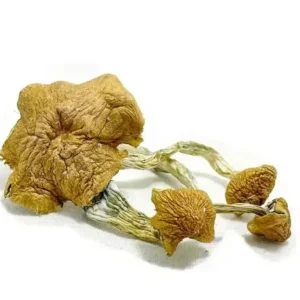
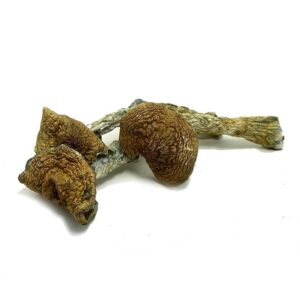
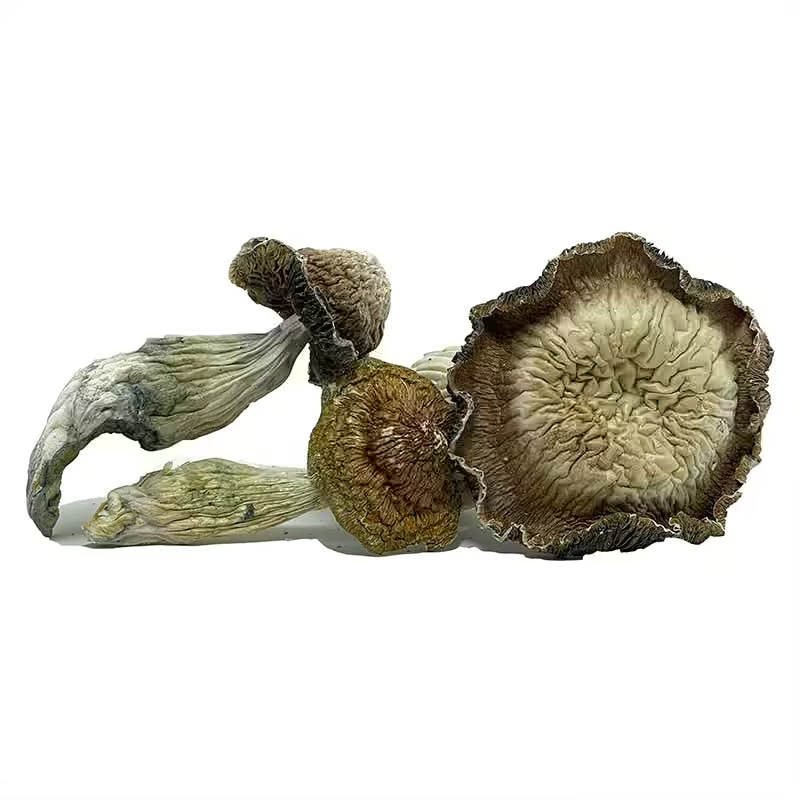
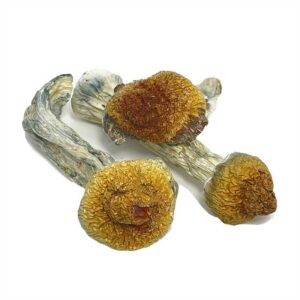
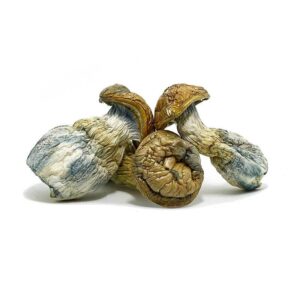
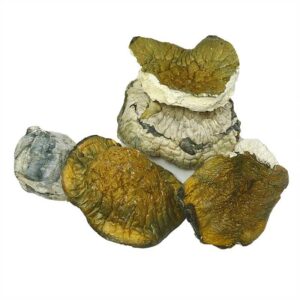
- Caps: Small (1-3 cm), spherical to flying-saucer shaped, golden-brown with heavy veiling; minimal flattening.
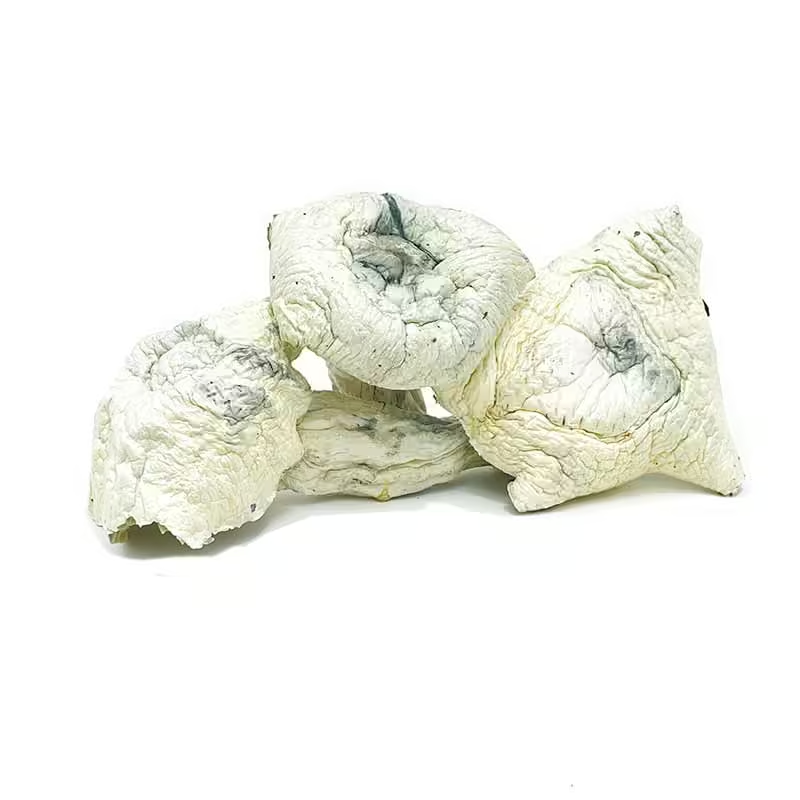
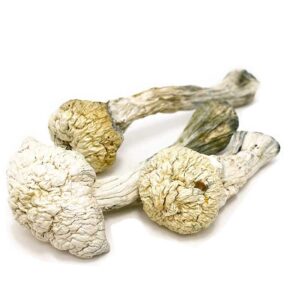
- Stems: Exceptionally thick (1-3 cm diameter), bulbous, pale with intense blue bruising.
- Gills: Dense, slow-sporing (grayish-purple).
- Blobs: Aberrant mutations—undifferentiated masses oozing potency.
Microscopy shows oversized spores (14-18μm). “Tidal Wave Mushrooms identification” pros note the PE-dominant morphology: stubborn veils and minimal spore drop. Bruising is profuse, signaling elite tryptamine levels.
History and Rise to Fame
Tidal Wave Mushrooms rocketed to stardom post-Psilocybin Cup, where it shattered records (3.82% psilocybin/psilocin). Predecessors like PE (isolated 1970s) paved the way, but Tidal Wave’s accessibility—faster than pure PE—democratized high-potency growing. Community forums buzz with its legend, influencing breeding trends. “History of Tidal Wave Mushrooms” traces a modern mycological revolution.
Biological and Chemical Powerhouse
Tidal Wave’s mycelium is aggressive yet contam-resistant, with PE-derived density. Tryptamine profiles:
- Psilocybin: 2.5-3.5%
- Psilocin: 0.5-1.0%
- Baeocystin/Norbaeocystin: Elevated for nuanced effects.
This chemistry yields profound 5-HT2A activation, promoting synaptic regrowth. “Tidal Wave Mushrooms potency” claims hold: lab-verified as one of the strongest cubensis strains.
Expert Cultivation Techniques for Tidal Wave
Challenging yet rewarding, Tidal Wave demand patience:
- Spore/Clone Prep: Use agar for isolation; PE genetics slow initial growth.
- Grain Spawn: Rye berries at 80°F; 3-4 weeks colonization.
- Bulk Substrate: CVG (casing verm/grain/coco) or wild bird seed/manure; cold pasteurize.
- Fruiting: 75°F, 93% RH, FAE; fruit at veil rupture.
- Yields: 2-4g dry per flush; 3-5 flushes.
Tips: Bottom-water to avoid wet spots; clones preserve elite phenotypes. “How to grow Tidal Wave” success hinges on sterile, low-oxygen incubation.
| Strain Comparison | Potency (% Tryptamines) | Growth Speed | Yield |
|---|---|---|---|
| Tidal Wave | Very High (3.0-3.8%) | Moderate-Slow | Medium-High |
| Penis Envy | High (2.0-2.9%) | Slow | Low-Medium |
| B+ | Medium (0.8-1.2%) | Fast | High |
Effects Profile and Research Potential
Microdoses (0.1-0.3g) spark creativity; heroic doses (5g+) unleash ego-death tsunamis—intense visuals, time dilation, unity. Effects: 30-60 min onset, 6-8 hour duration. Research cites therapeutic promise for cluster headaches and addiction.
Conservation and Future Implications
As a cultivated strain, Tidal Wave aids biodiversity via spore preservation. It fuels psilocybin legalization debates, with Cup data advancing science.
Conclusion: Riding the Tidal Wave Revolution
Tidal Wave crash through mycology norms with unmatched potency and intrigue. From breeding labs to research frontiers, they embody fungal evolution. Explore “Tidal Wave effects,” genetics, and grows responsibly.
Reviews
There are no reviews yet.