
Description
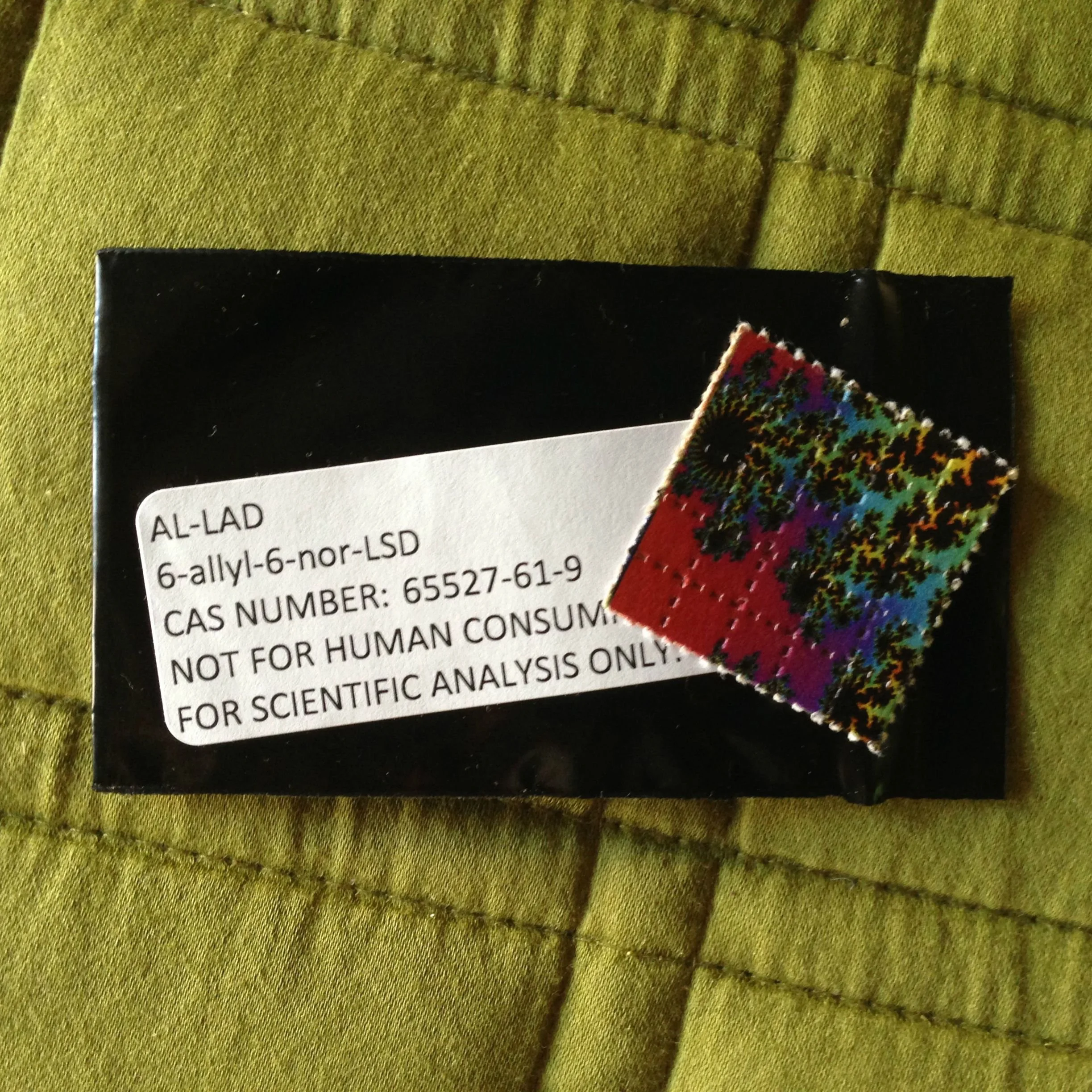
AL-LAD
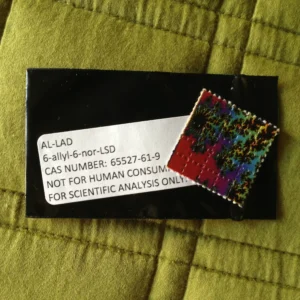
AL-LAD is a semisynthetic psychedelic belonging to the lysergamide class of compounds, closely related to the legendary LSD (lysergic acid diethylamide). Developed in the 1980s by chemist Alexander Shulgin and his colleague Otto Snow, AL-LAD features a unique modification: an allyl group attached to the nor-lysergic acid backbone, distinguishing it from LSD’s iso-lysergic structure.
Chemically, AL-LAD’s formula is C21H27N3O, with a molecular weight of 337.46 g/mol. This allyl substitution enhances its lipophilicity, potentially influencing its pharmacokinetics compared to LSD. According to Shulgin’s documentation in TiHKAL (Tryptamines I Have Known and Loved), AL-LAD was synthesized as part of efforts to explore structure-activity relationships (SAR) in lysergamides. Unlike LSD, which binds primarily to the 5-HT2A serotonin receptor, AL-LAD exhibits a slightly altered receptor affinity profile, leading to distinct subjective effects.
Key chemical facts:
- Systematic name: (6aR,9R)-N,N-diethyl-7-prop-2-enyl-6,6a,8,9-tetrahydroindolo[4,3-fg]quinoline-9-carboxamide
- Melting point: Approximately 190-200°C (as hydrochloride salt)
- Solubility: Soluble in ethanol and DMSO; sparingly in water
This structural tweak makes AL-LAD a prime subject for studies on psychedelic pharmacology, offering insights into how minor modifications can profoundly alter perceptual experiences.
History and Discovery of AL-LAD
The story of AL-LAD traces back to the post-LSD era of psychedelic research. While LSD was discovered by Albert Hofmann in 1943, the 1970s and 1980s saw a surge in analog synthesis amid the War on Drugs. Alexander Shulgin, renowned for his work on phenethylamines and tryptamines, turned his attention to lysergamides. In collaboration with clandestine chemists, he produced AL-LAD around 1984-1985.
Shulgin first documented AL-LAD in TiHKAL (1997), describing its synthesis from nor-lysergic acid via allylation and amidation reactions. Though never commercially marketed like LSD, AL-LAD emerged in underground circles during the 2010s as part of the research chemical (RC) boom. Online forums like Erowid, Bluelight, and Reddit’s r/researchchemicals became hubs for user reports, solidifying its reputation as a “gentler LSD.”
Today, AL-LAD represents a cornerstone in psychedelic renaissance discussions, with researchers revisiting lysergamides for therapeutic potential amid growing interest in microdosing and mental health applications.
Effects of AL-LAD: Dosage, Onset, and Duration
AL-LAD is renowned for producing visual-heavy psychedelics with less introspection than LSD. Effects are dose-dependent, typically administered sublingually or orally on blotter paper or in solution.
Standard dosages (based on aggregated user reports from PsychonautWiki and Erowid):
- Threshold: 50-100 µg
- Light: 100-200 µg
- Common: 200-400 µg
- Strong: 400-600 µg
- Heavy: 600+ µg
Timeline:
- Onset: 20-40 minutes
- Peak: 2-4 hours
- Total duration: 6-8 hours
- Aftereffects: 2-4 hours
Users describe AL-LAD as delivering intense open-eye visuals (OEVs)—fractal patterns, breathing walls, and color enhancement—often more pronounced than LSD at equivalent doses. Closed-eye visuals (CEVs) are vivid but less narrative-driven. Cognitive effects include euphoria, enhanced music appreciation, and mild time distortion, with reduced anxiety or “bad trips” compared to LSD. Body load is minimal, making it appealing for recreational psychedelics.
Pharmacologically, AL-LAD acts as a partial agonist at 5-HT2A receptors, with affinity for 5-HT1A and dopamine D1/D2 sites. Studies on similar lysergamides (e.g., LSZ, 1P-LSD) suggest rapid metabolism via hepatic enzymes, producing active metabolites that extend effects.
Potential Benefits and Therapeutic Uses
Emerging research positions AL-LAD within the broader psychedelic therapy landscape. While human clinical trials are absent due to its novelty, anecdotal evidence and LSD analogs’ data suggest benefits:
- Mood Enhancement: Users report profound mood lifts lasting days post-trip, akin to psilocybin’s antidepressant effects (Carhart-Harris et al., 2016, The Lancet Psychiatry).
- Creativity Boost: Enhanced pattern recognition and novel thinking make it popular for artists and problem-solvers.
- Microdosing Potential: Sub-perceptual doses (20-50 µg) may improve focus and emotional resilience, mirroring Fadiman’s microdosing protocols.
- Cluster Headaches: Like LSD, AL-LAD shows promise in aborting migraines, per Clusterbusters.org reports.
Preclinical studies on lysergamides indicate neuroplasticity via BDNF upregulation and default mode network (DMN) disruption (as seen in fMRI studies of LSD; Carhart-Harris et al., 2012, PNAS). AL-LAD’s milder profile could suit anxiety-prone individuals in therapeutic settings.
Risks, Side Effects, and Safety Considerations
No psychedelic is risk-free. AL-LAD’s safety profile mirrors LSD’s low toxicity (LD50 >16 mg/kg in rodents), but caveats apply:
Common side effects:
- Nausea (mild, onset 30-60 min)
- Pupil dilation and light sensitivity
- Increased heart rate/blood pressure
- Jaw tension
Psychological risks:
- Acute anxiety or paranoia (rare, dose-dependent)
- HPPD (hallucinogen persisting perception disorder) in predisposed users
- Exacerbation of latent mental health issues (e.g., schizophrenia)
Physical contraindications: Avoid with SSRIs (serotonin syndrome risk), heart conditions, or pregnancy. No known overdose deaths, but set/setting is crucial—hostile environments amplify negatives.
Harm reduction tips:
- Test substances for purity (ehrlich reagent turns purple).
- Start low, especially if new to lysergamides.
- Have a sober trip-sitter.
- Integrate experiences via journaling.
Tolerance builds rapidly (cross-tolerant with LSD) and resets in 3-7 days.
Legal Status of AL-LAD Worldwide
AL-LAD occupies a gray area in global drug laws. In the US, it’s unscheduled federally but falls under the Federal Analogue Act if sold for consumption (intent matters). Several states (e.g., Alabama, Arkansas) have explicitly banned it.
- UK: Class A under the Misuse of Drugs Act (2015).
- Canada: Schedule III.
- EU: Varies; controlled in Germany, Sweden.
- Australia: Schedule 9 (prohibited).
Always check local laws, as RC bans evolve rapidly (e.g., China’s 2015 analog crackdown).
AL-LAD vs. Other Lysergamides: A Comparison
| Compound | Visual Intensity | Duration | Body Load | Introspection |
|---|---|---|---|---|
| AL-LAD | High | 6-8h | Low | Medium |
| LSD | Medium-High | 8-12h | Medium | High |
| 1P-LSD | Medium | 8-10h | Low | High |
| LSZ | High | 7-9h | Medium | Medium |
AL-LAD excels in recreational visuals with less ego dissolution, ideal for social settings.
Research and Future Prospects
AL-LAD’s resurgence aligns with psychedelic science’s revival. Institutions like MAPS and Imperial College London study lysergamides for depression, PTSD, and addiction. Non-human studies (e.g., Nichols’ 2018 review in Pharmacological Reviews) highlight SAR for safer analogs.
Future directions: Clinical trials could validate microdosing claims, while synthesis optimizations aid neuroscience.
Conclusion: Navigating the World of AL-LAD
AL-LAD offers a vibrant entry into lysergamide psychedelics, blending LSD’s potency with unique visual flair and accessibility. From Shulgin’s labs to modern RC communities, its legacy underscores human curiosity about consciousness. Approach with respect, prioritize safety, and stay informed on psychedelic research.
Goldy Peters –
5 star review from me , would be back for more
Thanks
Raymond Pensley –
Delivered to in Australia , I am grateful
Ryan Sodds –
Wow , am surprised at the overnight delivery , thought it was a joke .Thanks guys , looking up to that coupon on the next order
Mel Reese –
Really good customer service , just got my package
Paula Romney –
Thanks ,I just got my ackage