
Description
Thai Elephant Dung Mushrooms
Thai Elephant Dung Mushrooms owe their name to their preferred growing substrate: the nutrient-rich dung of elephants. In Thailand’s humid lowlands and coastal regions, wild herds of Asian elephants roam freely, leaving behind piles of manure that serve as ideal breeding grounds for these psilocybin-containing fungi. Discovered in the 1980s by mycologist John Allen during expeditions in Koh Samui and southern Thai islands, this strain quickly gained notoriety for its prolific fruiting on elephant excrement.
Unlike many woodland mushrooms, Psilocybe cubensis Thai Elephant Dung thrives in subtropical climates with temperatures between 75-85°F (24-29°C) and high humidity levels above 90%. The mushrooms emerge during the rainy season (May to October), forming dense clusters on dung pats that have aged for several weeks. This adaptation to herbivore manure—rich in nitrogen, phosphorus, and organic matter—makes them one of the most dung-loving varieties in the Psilocybe genus.
Ecologically, these mushrooms play a vital role in decomposition. They break down fibrous plant material in elephant dung, recycling nutrients back into the soil and supporting Thailand’s biodiverse ecosystems. For enthusiasts researching “Thai Elephant Dung Mushrooms habitat,” note that they’ve also been spotted on water buffalo dung in similar environments across Southeast Asia, including Cambodia and Laos.
Identifying Thai Elephant Dung Mushrooms: Key Characteristics
Spotting Thai Elephant Dung Mushrooms in the wild requires a keen eye and mycological knowledge. These mushrooms feature:
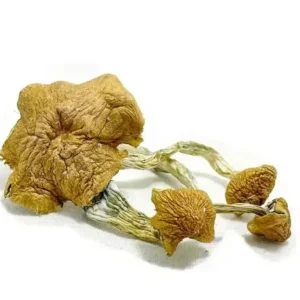
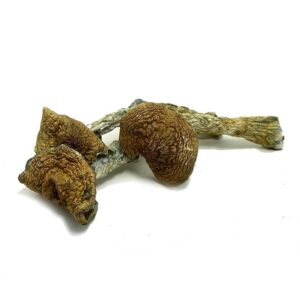
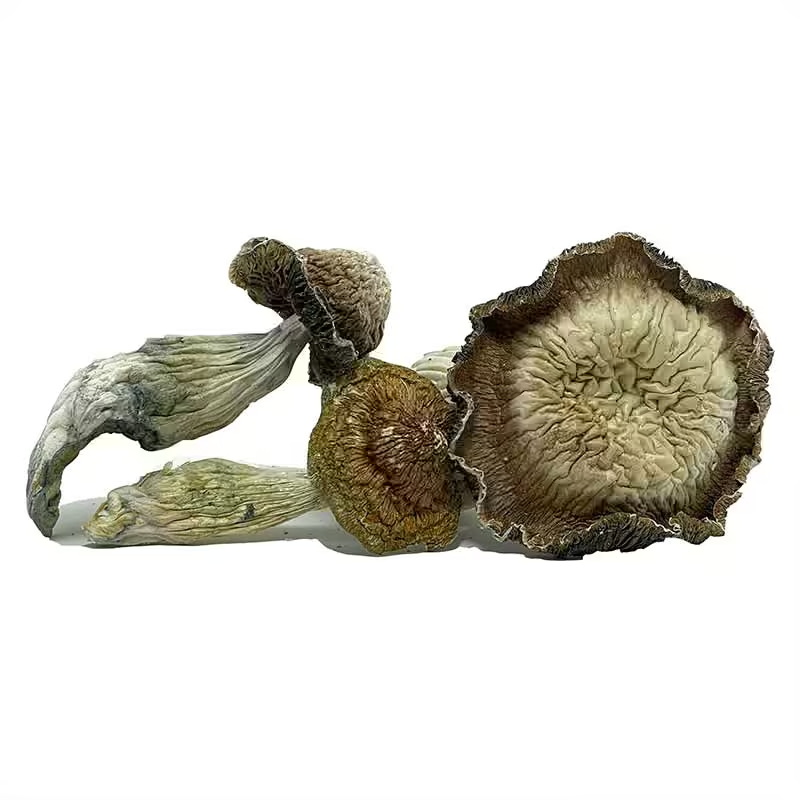
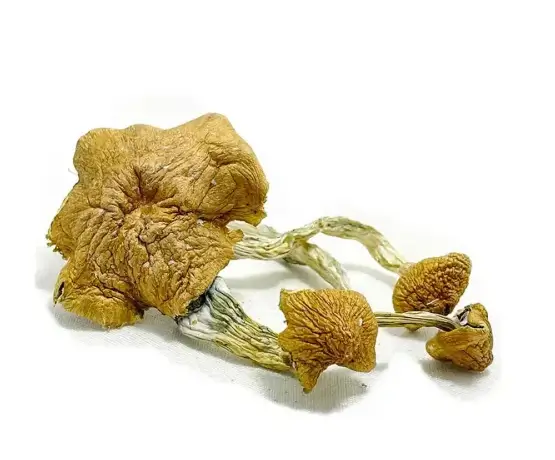
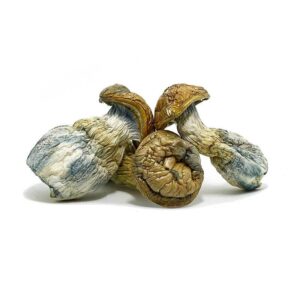
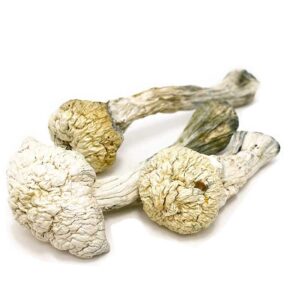
- Caps: 1-5 cm in diameter, starting conical and expanding to broadly convex or flat. Fresh caps are golden-brown to caramel, hygrophanous (changing color when wet), and often display a bluish bruise when handled— a hallmark of psilocybin presence.
- Gills: Creamy white when young, turning purplish-black with mature spore release.
- Stems: 4-15 cm tall, thick and bulbous at the base, white to yellowish with blue bruising.
- Spores: Dark purple-brown in print, elliptical under microscopy.
What sets the Thai Elephant Dung strain apart from other cubensis varieties like Golden Teacher or B+ is its robust stature and rapid colonization speed. Genetic analysis shows subtle differences in psilocybin and psilocin content, often testing higher in potency due to environmental stresses in dung habitats. For those querying “Thai Elephant Dung Mushrooms identification,” always cross-reference with spore prints and bruising tests—never consume wild specimens without expert verification, as lookalikes like Panaeolus species exist.
The History and Cultural Significance of Thai Elephant Dung Mushrooms
The story of Thai Elephant Dung Mushrooms is intertwined with Thailand’s shamanic past. Indigenous hill tribes, such as the Hmong and Karen, have long revered psilocybin mushrooms as “happy grass” or het pa loong (cow dung mushrooms). Archaeological evidence from Ban Chiang suggests ritual use dating back 3,000 years, predating written records.
In modern times, the strain exploded in popularity after Western explorers like Allen documented it. By the 1990s, spores were shared globally via underground networks, sparking a cultivation boom. Today, Thai Elephant Dung Mushrooms symbolize resilience—much like the endangered Asian elephant—prompting discussions on conservation. Ethnomycologists highlight their role in spiritual practices, where microdoses facilitate introspection, echoing ancient Ayahuasca-like ceremonies.
Searching for “history of Thai Elephant Dung Mushrooms“? This strain bridges ancient wisdom and contemporary mycology, influencing research into psilocybin’s therapeutic potential for depression and PTSD.
Biology and Chemistry: What Makes Thai Elephant Dung Mushrooms Unique?
At the cellular level, Thai Elephant Dung Mushrooms are a testament to fungal adaptability. Psilocybe cubensis produces psilocybin, a prodrug metabolized into psilocin, which binds to serotonin receptors (5-HT2A) in the brain, inducing altered perception, euphoria, and synesthesia.
Lab tests reveal Thai Elephant Dung specimens averaging 0.8-1.2% psilocybin by dry weight—higher than many strains—thanks to dung’s nutrient profile enhancing alkaloid synthesis. Genetic sequencing identifies unique alleles for faster mycelial growth, making it a favorite for study.
Mycelium forms dense, rhizomorphic networks, colonizing substrates in 10-14 days. Fruiting bodies release billions of spores, ensuring propagation in ephemeral dung piles. For “Thai Elephant Dung Mushrooms potency” searches, variability exists; environmental factors like substrate pH (6.5-7.5) and light cycles influence yields.
Cultivation Insights for Thai Elephant Dung Mushrooms
While wild harvesting is risky, home mycologists prize Thai Elephant Dung Mushrooms for their beginner-friendly cultivation. The PF Tek method suits this strain perfectly:
- Spore Preparation: Inoculate brown rice flour/vermiculite jars with spores.
- Incubation: Maintain 80-84°F for 2-3 weeks until full colonization.
- Substrate: Transfer to dung-enriched bulk (50% pasteurized elephant or horse manure + coir/vermiculite).
- Fruiting: Introduce fresh air exchanges, 12/12 light, and 90% humidity at 75°F.
- Harvest: Pick at veil break for optimal potency; yields average 3-5 flushes.
This strain’s aggressive mycelium resists contamination, fruiting large, meaty mushrooms (up to 20g wet). Advanced growers experiment with monotubs or outdoor beds mimicking Thai conditions. Queries like “how to grow Thai Elephant Dung Mushrooms” often lead here—focus on sterile technique for success.
Compared to other strains, Thai Elephants excel in high-humidity setups, producing denser fruits with vivid bluing.
Potential Effects and Research on Thai Elephant Dung Mushrooms
Users report Thai Elephant Dung Mushrooms deliver intense visuals, emotional breakthroughs, and ego dissolution at 2-4g dried doses. Effects onset in 20-40 minutes, peaking at 2-3 hours with waves of geometric patterns and nature-connectedness—fitting their jungle origins.
Emerging studies, like those from Johns Hopkins, explore psilocybin’s neuroplasticity benefits, with Thai strains contributing to strain-specific research. Always prioritize set, setting, and integration.
Ecological and Conservation Ties to Thai Elephant Dung Mushrooms
These mushrooms underscore elephant conservation. As poaching threatens Thailand’s 3,000 wild elephants, dung-dependent fungi face habitat loss. Mycoremediation projects use cubensis to detoxify soils, highlighting their environmental value.
Conclusion: The Enduring Allure of Thai Elephant Dung Mushrooms
Thai Elephant Dung Mushrooms embody nature’s alchemy—transforming waste into wonder. From Thai jungles to global labs, their story captivates with potency, history, and adaptability. Whether you’re a mycophile pondering “Thai Elephant Dung Mushrooms benefits” or cultivation tips, this strain invites deeper exploration of fungi’s mystical realm. Dive into the science, respect the culture, and appreciate the elephant’s unsung role in this psychedelic saga.
Reviews
There are no reviews yet.